adoption’s other stolen motherhood

On Father’s Day weekend, my husband and son took a trip out to see some family, planning on staying overnight so they could attend a Sunday baseball game. I went out to the car to say goodbye to Liam and as I pulled away from his sticky preschool boy hug, he said

Mommy, please come!

For many mothers, this is a standard, heartwarming child’s plea: “Mommy,” our children urge, “don’t go!”

Another example: At Liam’s end of school year party, he refused to participate in his class’s end of year show. Once he sees Mommy, he breaks down completely. He’s always the group’s only child unable to join in when Mommy’s around, needing me instead of his friends. This is a habit formed since he was two years old.

For adoptees-turned-mothers, these events are harsh skips in our daily soundtrack, forcing us not into the quiet reverie of motherhood but into that complicated place called abandonment. What, I wonder, have I done to reveal my life’s secret anxiety?

brandon-wong-420588-unsplash

I consider all of this in context of not just my own personal history, but the history of the many adoptees who become parents. Is our heightened sense of loss, our prescient understanding that at some point our children will grow into adults who may or may not reflect our parental failings, so tightly wound into our interactions that we pass it on to our children?

I can’t speak for others, but to me, it’s a fascinatingly painful fear. My son’s innocent pleadings for a Mommy he never realizes could leave both confound me and, somewhat embarrasingly, generate a deep sense of envy toward my own son. Because of my simple decision to not give up on him, I’ve constructed for him a foundation unshakeable–unless, of course, I walk away.

Seeing its utter simplicity, seeing just how easy it could have been for my life to not be marred by adoption’s persistent complications, repulses me. I know for a birth mother, adoption isn’t easy.

Still, when I consider this notion of presence equaling simplicity, my memories rewind themselves like a tape playing backwards. School plays and insults and Christmases and harsh words and smiles become garbled together in frenzied reversal. As I begin with my birth–the only thing my son and I have in common is that we were born–I start my life over, trying to replace my son’s experience with my own. Eventually I give up, unable to write a story that never existed.

At that point, I wonder: Is being a “a good mother” one who merely sticks around? Does that mean I get a pass to be as mediocre or terrible as possible, simply because I know that no matter what, a child almost always wants nothing but his birth parents–regardless of skill?

Obviously, parenting takes far more effort than just described. As an adoptee, however, the innocence of motherhood–the innocence allowing moms to make mistakes and forgive ourselves–was taken from us when we ourselves were taken away.

Like other parents, we know how carefully children watch their parents. But unlike the unadopted, we have a full appreciation of the long-reaching impact our presence has on a child. Adoption ends the childhood innocence of believing our parents will never stop wanting us. It destroys the myth of family as safe haven. Adoptees, unfortunately, know how untrue that can be, how carefully we tread the line between good and bad parents. Despite it not being an easy choice to walk away (I wouldn’t–ever), I don’t think we can ever fully believe that, since it happened to us.

Because of adoption, the joy of motherhood–one I’m owed–has been destroyed.

As Liam grows older, articulating his desire for Mommy’s closeness is becoming stronger and more frequent. With his developing sense of self and familial bond–that of which I still struggle to experience–he unintentionally and continuously highlights a permanent space between us. I actively work on closing it while remaining aware of our life’s distinct path, a path chosen not by either of us but by those who swore to love us forever.

who owns an adoptee’s story? overshare versus pride in adoption

Do a search for adoption in the news (human adoption–NOT pet adoption; Google likes to lump those two together) and you’ll be overwhelmed by the number of adoption “journey” stories told not by adoptees, but by adoptive parents.

Sandra Bullock, these random white parents of a transracial adoptee, and yet another white woman’s story of adopting a Chinese baby do make for compelling blog posts and articles. We’ve got the fuzzy-feels of saving a child, helping a child, and of course, lots of tears.

white tears.gif

But that’s not all! Countless books have been written on what it’s like to adopt, from the financial hardships, the invasive home studies, the marriage strain, and the pseudo-enwokening of transracial adoptive parents. Most conclude with a happy tale of a family formed, love gained, and a child destined for greatness.

Why is this a problem?

For adoptees, these parent-centric narratives have several unintended consequences:

  • Parents’ voice overrides the child’s before the child can articulate their side
  • By the time the child can speak up, the community’s already defined the kid’s  life, so any adoptee-generated criticism is automatically discounted
  • Weird photos and personal details of a kid’s life are shared without the child’s permission
  • The kid will be a CHILD FOREVER, based on their early portrayal
  • Traps kid in state of forced gratitude forever

quote_for_overshare

By selling or sharing these stories–undoubtedly coming from a place of parental pride–I wonder if this borders on exploitation.

As a mother, I’m hesitant to share my son’s um, birth journey. I guess the biological kid equivalent would be his story starting from conception to the push out the womb and all the details in between.

First of all, sharing that would be awkward. Second, he’s going to grow up one day and probably direct teenage angst at me for a zillion reasons and my oversharing of his trip from being the sperm that won to a disgruntled teenager doesn’t need to be complicated by my inability to keep my mouth shut.

overshare one.jpeg
This goes for ANY relationship. You know if you’re guilty, so don’t get mad.

Why is that any different for adoptees?

Being adopted, I get the process of obtaining me was fraught with complications, paperwork, stress, and probably heartache. Sharing that over several decades ago, however, was limited to conversations over wall-mounted corded phones and maybe a Christmas card. Today, I get that instant Facebook likes and blog post shares offer a validation more addicting than those provided by an adoptive-parent support group.

However.

We get you love your adopted child.

We understand the process was difficult.

And we acknowledge infertility sucks.

But please remember your child will inevitably become an adult.  An adult who, upon reflection, will want freedom of expression without being chained to their parents’ pre-existing portrayal and public back-pats.

There’s one other less obvious side effect of these stories and that’s the continuation of adoption as a practice without consideration of an adoptee’s experience.  The sunshine-and-roses narrative–while realistic for some adoptive families–means prospective adoptive parents will use these articles as mirrors for their own experiences, leading to potential horror and disillusion when their child grows up and doesn’t fulfill these pre-existing stereotypes.

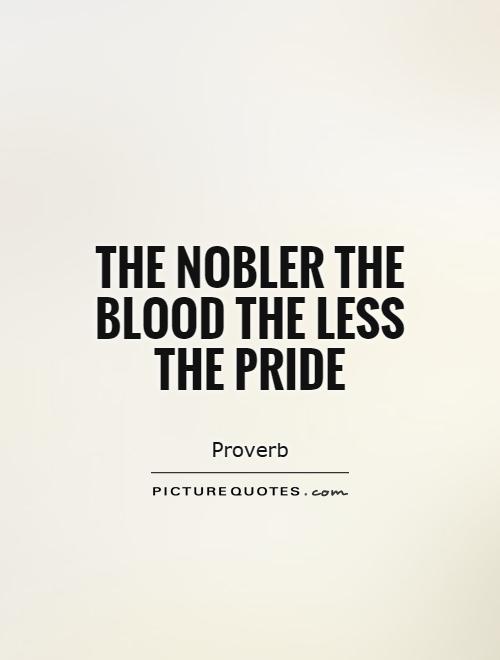
To borrow a slightly cliched and Biblical saying, pride comes before a fall. In this case, I ask adoptive parents to restrain themselves a bit for their child’s sake, remembering their kid grows up and deserves to tell their adoption story themselves. Adoptees own their adoptions story. You don’t need the validation of thousands of strangers to justify your decision to adopt your child.

pride
I’m always hesitant to share so-called unsourced proverbs, but this is totally appropriate here.


when i lost my mother, i found myself

marcelo-silva-385218-unsplash.jpg

When I was just about to turn 26, the ovarian cancer savaging my mother’s tired internal organs finally completed its violent mission. My mother died on Thursday, July 15, 2010, after a three-year fight she knew she’d lose.

It was a humid summer day and my room was a mess.  My brother–or was it my aunt?–knocked on my door that morning, to tell me my mom was gone. Several hours later, I was told there was something left for me on her nightstand. It was a card, addressed to me, while her body still lay in her bed and the hand that penned the message still and limp.

It took me several moments to open the card, but when I did, the message was clear. Full of love and persistent motherly concern. In a shaky hand, she gently urged me to

Find out why you’re so angry all the time.

Before she died, my mother would hug me gently, a body wrapping me in the medicinal scent of chemotherapy drugs and holistic remedies. She’d whisper

I’m sorry I couldn’t help you.

It’s been many years since I received that card, a memento framed and hanging in my hallway outside of my son’s bedroom. It’s displayed in its angel-fronted glory, in a custom frame underneath my son’s first foot and handprints and a portrait of my mother as a preschooler.

Back then, I took her message as a sign that yes, I was angry and her efforts to help had failed. I still attributed my anger to overall jealousy and discontent with the world–I hadn’t yet discovered my rage related to a lifelong history of abuse, racism, and adoption.

The most difficult thing in re-reading her inscription–so lovingly writ!–is acknowledging that she, as well as my father, was a source of that anger. That her choices in adopting me, her inability to progress and open her mind to color, and her inadvertant support of my father’s racist-abusive behavior caused my problems. That my mother, to whom I experienced an unhealthy over-attachment as compensation for adoption-related attachment issues, wasn’t the innocent, well-meaning idol I knew.

A disheartening reality, one most people who lose their parents young must face: Confronting the possibility that your parents weren’t perfect, but unknowingly failed you in many ways.

It’s a complicated love. I love my mother and wish she were still here, playing with her grandson and existing not as a playground ghost  but my friend and mom. But realizing her errors and her misconception that my anger was due to anything but her actions cements the wound adoption wove into our relationship.

She died believing she did right, which I suppose is the best way to go. But with her absence, I’ve slowly unfurled her imperfections, not out of disrespect to her but in an effort to free myself from a life chained to grief.

Her memory influences my adoption reflections. I’ve written of our racial differences in Through Her Mirror: What my white mother’s view on makeup taught me as a Korean adoptee and her fundamental misunderstanding of adoption and race in A journey through space, a journey divided. I shared her racial ignorance in Shut Up and Smile. None of this was done maliciously. It’s all part of our story together. The journey she took me on is ultimately one we’d never conclude together, and while honoring her through unflattering memories might not seem loving, it’s a testament to the complex nature of transracial adoption and a mother-daughter relationship.

Perhaps this article’s title is misleading. I have yet to “find myself.” Actually, I dislike generic terminology. Maybe a better way frame this, for myself and other adoptees suffering through loss without their mothers, is

When I Lost My Mother, I Found Freedom

adoptive mom returns children; i respond

In case you missed it, I wrote an article in response to a white woman who kept her adopted children for four months–and then returned them.

Here’s an excerpt:

Dear Every Adoptive Parent Who Thinks This Is Okay,

You promised to love your adopted children like your own, thinking adoption was the solution to whatever inability you had to bear your own biological children.

You underwent the process to obtain someone’s children, tiny human beings with souls already marked by uncertainty and insecurity. Children who, from birth, were subject to separations no being should ever consider humane.

For a short moment in these children’s lives, you provided hope and excitement. Even at young ages, children learn vulnerability is a liability and don’t offer it easily. But with their adoption, they believed they’d found a home.

But after only four months, for whatever reason — but my guess is that it was the side effects of their trauma and unstable upbringings — they were actually given back.

Read the rest.

to survive or thrive

I love gardening. I love waking up and walking outside to my suburban yard each morning and seeing what sprouted up overnight, checking if any tiny tender green leaves cut their way through my sandy South Jersey soil.

francesco-gallarotti-72602-unsplash

I’m an impatient gardener, though, getting down on my hands and knees several times a day, inspecting the dirt while the morning’s moisture seeps through the knees of my pants.

Recently and at my urging, my husband and I moved a knockout rose bush from our shady front yard to a super-sunny spot in the backyard, knowing it’d bloom tremendously with the sun’s uninterrupted light. In its previous location, it was a woody and awkward thing–bordering on an eyesore–producing only one or two tiny roses each season but never anything more.

It was surviving out front, sure. But was it thriving? No.

Any plant will survive in imperfect conditions, as long as it has the absolute minimum requirements to keep itself going. But if it’s a flowering species, it likely won’t offer blooms, only green leafy stems and foliage but never reaching its true potential.

Like that rose bush, many adoptees simply survive. We move forward using grit and adrenaline, pulling through abuse and racism and second-class status and hurt and loss, and we become functional adults with lives built on, again, survival.

But we’re not thriving.

I think about what happened with that rose bush and what happened to me and plenty of adoptees like me. Taken from uncertain circumstances in mysterious greenhouse incubators, plunked down in an environment offering life’s basics and maybe even a little “more,” yet still unable to reach our full potential. We fail to thrive. Or, using my gardening example, maybe we notice a struggling little patch of grass attempting to set seed, give it water, and walk away, wondering why isn’t it growing?

But this is what’s happening:

After we got my dog, after my husband attended therapy with me, and after I slowly discovered that what adoption and racism did to me wasn’t healthy, did I find myself just like the plants outside. Because when I was young, after growing not into the docile Asian daughter promised by the adoption agency, but instead a headstrong girl with her own personality, genetic code, and needs, I was transformed into my family’s ungrateful wench. The miserable bitch who started arguments with my parents and just couldn’t be happy.

My family was full of homecoming queens and prom kings and sports stars. I was anti-social, a bookworm, and hung out with losers (even though I had few friends). I frequently lost friends due to my jealousy and difficulty trusting people. None of this was attributed to adoption or my insecure attachments. Instead, it was my status as my family’s outcast that simply explained it all.

I was difficult, yes. But like many adoptees (especially transracial ones adopted in the early days), emphasis was placed on my problems being due to lack of gratitude and severe personality defects. None of it was attributed to my environment or stuff like this:

or this:

I’m not perfect. I absolutely had an attitude problem, but like my rose bush, in the wrong environment–even with the minimal requirements needed to live–an adoptee or wounded child won’t grow into a happy teen and contented adult.  For many years, I blamed myself for being different. I lashed out at anyone white, anyone thin, anyone better than me because there was always something wrong with meWithout understanding or compassion, there’s no way to safely move from survival mode to thriving. So we shift into fight mode, unable to take flight until we’re able to detach ourselves from that environment and rebuild our lives.

I don’t blame my family or my community. By stepping back and observing life’s strange landscapes, I’m able to see that we all had a responsibility to each other and somewhere, something failed us. And maybe that’s why I’ve spent years trying to perfect my plants. Seeing life take shape from my best efforts rewards me by providing a living metaphor for life.

I am so happy to have found support and space to thrive. Learning to trust this environment–one I’m building entirely on my own with a few special folks (and you) along the way–is terrifying. But my hope is that we all tell our stories and are given equal representation in the media and the safety to explore our histories. We aren’t perfect, but we aren’t to be shunned for our depression or rage or challenging behavior. No child deserves to be labeled by their own family, but as my time in my garden illustrates, thriving is possible once you find an environment that allows you to bloom.

getting help, giving help: my husband attended my adoption therapy session

We’re alone, we’re isolated, we feel defeated. Adoptees express a stomach-tightening terror at sharing their perspectives with others, fearing immediate judgment and blame if their adoption experience does not line up with typical societal expectations.

But yesterday, after many months of putting him off, I finally allowed my husband (Jason) to attend a counseling session with me. He was more than willing to come with me, carving out precious time in his work schedule every other Wednesday, tentatively asking each week: Do you want me to keep it on my calendar? I will move a meeting for you.

I put him off because I wasn’t ready to let him into my space. He understood. But he was anxious to attend, as he’d admitted his ignorance to burden of pain I carry, a load filled with trauma and abuse and abandonment and racism. Our arguments frequently centered around those issues. My jealousy of his comparatively typical upbringing led us to ugly fights and triggered (I hate that overused word) intense blistering rage in me, forcing him into first a defensive mode and finally, for his emotional survival, offensive.

This wasn’t healthy, but it’s not surprising given my relationship with adoption and his only tangenital exposure to it. It’s a plight many adoptees face when in intimate relations with others.

But letting him attend yesterday was a hugely positive experience and this is why.

  1. We talked freely with a mediator. Neither of us was allowed to veer off into angerland.
  2. Sharlene (my therapist) would interject if it appeared one of us was not hearing the other.
  3. If one of us wasn’t effectively communicating, Sharlene would stop us and re-interpret.
  4. We left with a tangible plan of how to handle large issues, based on an agreed upon strategy. Small steps, though.

My goal is to get Jason to understand the depth of my pain, something he won’t always be able to properly respond to or comprehend. But the idea is I want him to just acknowledge what I carry each day and if he can, then true healing can begin.

What we had to do was learn that we can validate each other’s experiences without invalidating our own. This is hard for adoptees, because many of us have such polarized thinking that if someone isn’t fully with us, they’re fully against us (like we’re either kept or given up; no in-between). We also need to respect each other’s emotions because there’s no good trying to change either a feeling or an opinion.

And one thing I constantly tried to do was seek apologies. But seeking apologies only asks for someone to be a bad guy and someone to be a good guy, another hallmark trait of an abandonment and abuse mindset. So instead, we look more to addressing that we’ve been triggered, give ourselves a time-out, and move forward.

ryan-riggins-216051-unsplash

I’m sharing this because it is possible to make it through this adoption mess with someone, but it’s okay to do it on your time. It took me years before I allowed him into my therapy session. It’s a risk, just like any part of our adoption journey. I am thrilled he’s so willing to help me, for our family’s sake and my own, and I want you to know it can be done.

Be good to yourself and never settle for anyone or anything less than what you feel is right for you. Before Jason, I’d played into the evils that were fed to me from my family and community, dating only those who were not good for me because I didn’t feel I was good enough in general. Good enough for a quality partner, good enough to be a friend, good enough to be a child worth keeping; the only position I’d ever believed I properly held was second best. I worry this is a chronic issue in adoptees. Since we were left by our first caregiver, why should be good enough for anyone else? 

I don’t expect anything to happen quickly, though. Sharlene emphasized patience. And for the first time in my life, I have patience, for myself and someone else. I think we owe it to ourselves as adoptees to allow ourselves the space to heal, to not rush ourselves this time. After all, so much has been taken away from us, but this time, we can use our path to healing as the first step in regaining control over a life that we never chose.

“we family”: a message on adoption trauma, from my son

monica-gozalo-138999-unsplashPeople who don’t believe in adoption trauma didn’t see my three-and-a-half year old’s son reaction when I angrily told him
I’m leaving.

I’m ashamed, I am. It was an unusually difficult day, with him home from school sick with the sort of illness that spontaneously resolves an hour after drop-off. I’d hopefully began my day, intending to write and do the other invisible things mothers do while children are busy growing.

By evening and before my writing workshop, I’d had it with L’s* “failure to listen.” He, along with the dog, ran sprints around my first floor, screaming and barking in a way that made it difficult to determine which noise was coming from what temporary monstrosity. My husband was almost home and I was putting on my coat so I could escape.

L lunged down the narrow hallway, screaming a preschooler’s typical gibberish. I screamroared

Mommy’s leaving you because you never listen.

L stopped.

The dog stopped.

The air in the house, previously made of shaking atoms and vibrating sound waves, became a paralytic poison.

L’s face held none of the smiling glee from the seconds before I swiped at his confidence. He looked at me with a primal vulnerability. He considered my threat and said

You can’t leave. We family.

And in that moment I realized exactly what I said and what adoption trauma did to me. It transformed mothering into an option, a threat, a weapon. A powerful tool to wield at misbehaving children because I believed myself unwanted. A five-second declaration laid bare my fractured attitude toward family.

I share this shameful moment as proof of a child’s awareness of a mother’s presence. And that a threat to leave—not just to leave to run errands but to leave, forever—is understood in a child’s abstract way. My voice, a tool used for sharing my own adoption trauma, issued forth the same threat adoptees received from their relinquishments.

I hope readers struggling to accept the reality of adoption trauma read my words and finally believe. Believe babies and children are equipped with survival instincts so heightened that those intuitions remain at the forefront of their innocent defense; and, believe, for once, this trauma manifests itself throughout an adoptee’s lifetime.

I am not proud of my behavior. I am working conscientiously to correct my words and understand my actions. I have since apologized to my sweet son, but I want my example to ring forth as a warning:

Adoption trauma exists. Overcoming trauma takes years of dedicated work. Adults possess a power over children that deserves mindful awareness. Please remember: Children are listening.

*Name abbreviated to protect the (literal) innocent. And to prevent him from, years from now, yelling “MOOOMMM!” when he finds my writings.

don’t stop believing, adoption activist friends

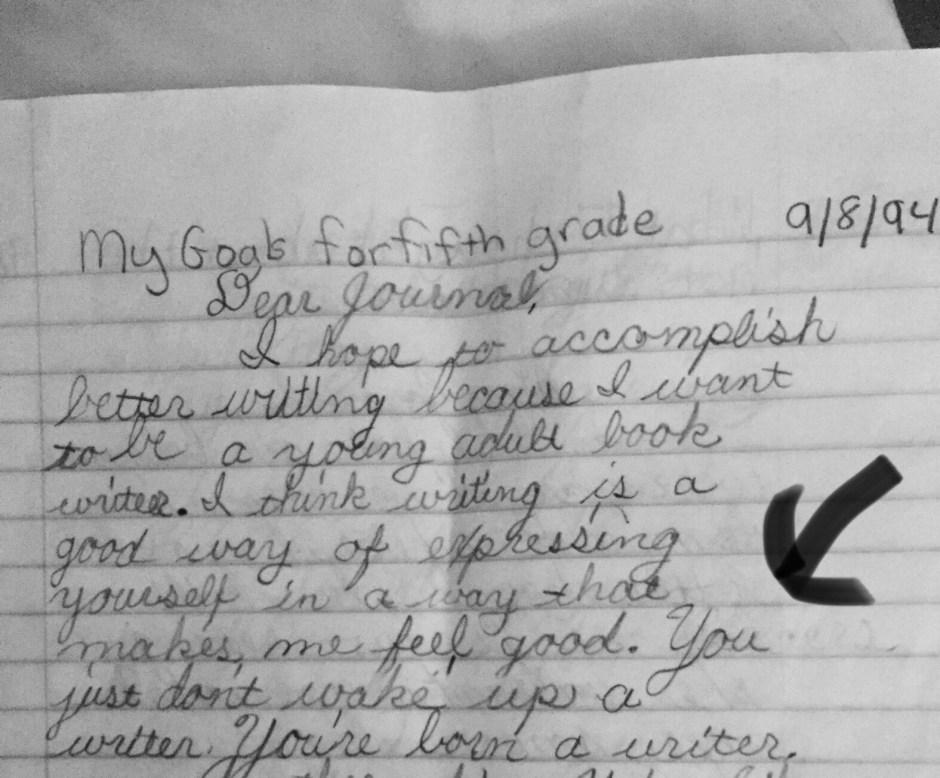
IMG-4332.JPG

“I hope to accomplish better writing because I want to be a young adult book writer. I think writing is a good way of expressing yourself in a way that makes me feel good. You don’t wake up a writer. You’re born a writer.”

I found this the other day, buried and forgotten with an assortment of other journals I’ve kept. The hilarity and coincidences life throws us are so bizarre they seem contrived. And yet, here we are. The lesson? Don’t EVER give up and don’t let people discourage you, ever. Especially with writing, where sometimes the rigors of high school suck the fun out of the creative craft. Let your passions rest sometimes, but don’t forget from where they came.

Fifth-grade me would be proud, I think.  I’m not into the young adult genre–the youthful mindset’s long been scared out of me–but hey, after decades of meandering, I stayed true to the path.

Thanks for sharing this journey with me!

what my first launch party taught me about adoption writing

Hello, adoption activists: We’re begging the non-adoption community to #JustListen, but I think they might be hearing us.

tilde launch party.jpg
Thank you, Tilde: A Literary Magazine and The Spiral Bookcase!

Before reading “the lucky ones,” I introduced myself as what others would consider an adoption activist, but I told the crowd that I just call myself a writer. I explained that adoptees are desparate to be heard, but we’re speaking to a crowd already familiar with our struggle.

But art, I said, is a great unifier.

Through “the lucky ones” and other pieces I hope to release (including the upcoming “playground ghost,” due out next month by Parhelion Literary Magazine), I present, in what’s intended to be a relatable way, our pain and loss and longing. All of those heartaches are easily identifiable by anyone, adopted or not,  who circulates among us throughout this sometimes-wretched hive. But by weaving the subject within words recognizable by any human who experienced abandonment, people will, I think, find themselves behind the same mask adoption activists wear and understand our small niche’s large undertaking.

I encourage you to use whatever skills or talents you have to keep pushing for an audience. Knit hats for struggling young mothers, donate diapers to women’s shelters, create pottery for baby mementos–it doesn’t matter. Our art will resonate with the greater community–just speak to them and they will listen.

It will happen–we won’t give up.

A special thank you to Frank and Stephanie and Reshma and Lynelle and Rochelle and Marcie and Suzan and Lana and Adam and Liz and countless others who have helped get my work off the ground. Much appreciated!

it’s a matter of perspective

The internet is up in collectively confused arms (do we increase our tissue box supply or dust off our pickets?) over this latest factoid:

plummeted
Tear-faced children: The perfect antidote to critical thinking.

On the one hand, proponents for adoption reform or cessation are thrilled. On the other, adoption supporters or those who just don’t understand why adoptees are skeptical about such a seemingly heart-wrenching newsbite should then read the troubling responses like this:

There are a few errors here, but the assumptions (and rhetoric) stated above routinely plague adoption activists and hold us back. Let’s break it down:

  1. “the cost”
    • Implies financial barriers prohibit “getting” a baby, as though a baby was an inanimate object or another status symbol; commodifies a human being
  2. “3rd world places”
    • Ethnocentrism implying undeveloped countries can’t care for their own
    • Partially racist
    • Outdated terminology (very telling)
  3. “[give] Americans their unwanted”
    • WHAT.
    • Reinforces the idea that adoptees began life as truly unwanted, partially upholding the “perpetual child” myth
    • Does not support in-country social services or family support
    • Ethnocentrism, and like there isn’t an adoptee issue here in America?

We MUST continue dispelling the myths surrounding adoption. From an adoptee perspective, this is a huge sign that we have miles to go before people understand the damage done by adoption. What’s worse is that attitudes demonstrated above discourage support for struggling mothers and fathers, framing adoption as the only ethical solution to their temporary problems.

As long as dialogue like this continues, control will steadily be wrested from families, as they remain convinced they cannot or should not seek help from their own governments. Shipping children out to the U.S. is not the answer.

Adoption, when it works as intended, can be wonderful. But supporting family preservation is an excellent solution as it empowers mothers, fathers, and children, rather than reducing them to desperation and lifelong trauma.

Like this? Want more? So do I! Find out about my upcoming ventures on my Patreon page!